Korean Cuisine Reimagined: Chef Jueun Park on the Philosophy Behind Jueun
Located along Gyeonghuigung-gil, one of Seoul’s most historically resonant streets, Jueun is a fine-dining restaurant devoted to the depth, structure, and continuity of Korean cuisine. Led by Chef Jueun Park, Jueun approaches Korean food not as a trend-driven reinterpretation, but as a living cultural language—one shaped by seasonality, preservation, craftsmanship, and collective memory.

This article explores Chef Park’s culinary philosophy, his approach to bansang (the traditional Korean table), fermentation and preserved foods, regional research, and the question at the heart of contemporary gastronomy: how Korean cuisine can be meaningfully carried into the future.
Chef Jueun Park and the Essence of Korean Cuisine in Seoul
When asked to define the essence of Korean cuisine, Chef Jueun Park does not begin with recipes or techniques. Instead, he points to a single image: a table set for a meal.
Seasonal ingredients grown on Korean soil are placed alongside preserved foods—jang (fermented sauces), jeotgal (salted seafood), and kimchi—foods that embody time itself. On one table, immediacy and duration coexist. Fermentation, seasoning, texture, and temperature connect organically, forming a meal that reflects not only taste, but life, culture, and human relationships.
For Chef Park, Korean cuisine is not a fixed canon of dishes. It is a rhythm shaped by season, time, and people—a way of eating in which everyday life is revealed.

Why Bansang Is Central to Jueun
At the core of Jueun’s identity is the concept of bansang, the traditional Korean table setting. A bansang allows for multiplicity: multiple flavors, multiple ways of eating, and multiple interpretations by the diner. Rice may be mixed into soup, dishes may be combined or tasted individually, and no single order is imposed.
This freedom, however, is supported by rigorous structure. Each dish must arrive at the precise temperature and condition, and the table as a whole must remain balanced. Achieving this moment requires complete synchronization between the kitchen and the dining room.
“The emotion I want to convey through Korean cuisine is abundance,” Chef Park explains. “Not abundance in quantity, but the generosity of experiencing many different Korean flavors at once.”
In response, Jueun continues to question conventional course-based fine dining, exploring ways to reduce rigid structures and instead deepen the expressive power of the bansang format.

Why Chef Jueun Park Chose Korean Cuisine
Chef Park did not begin his career with absolute certainty that Korean cuisine was his destiny. While working in restaurants abroad early on, he became acutely aware of how he was perceived: first and foremost, as a Korean chef.
“It was then that I realized what I could express most honestly was my own culture and identity,” he says.
While many Korean fine-dining restaurants adopt Western culinary frameworks and incorporate Korean elements afterward, Chef Park chose a different approach—beginning with Korean cuisine itself. He sought to learn its foundations, philosophy, and emotional language before applying contemporary techniques.
His training at Hansik Space, led by the highly respected Chef Cho Hee-sook, deepened his understanding of both the origins and present-day expressions of Korean cuisine.
Preserving a Fading Culinary Lineage
As Seoul’s fine-dining scene expanded rapidly, Chef Park observed a paradox: despite growth and global recognition, fewer chefs were engaging deeply with Korean culinary traditions. Many younger chefs approached Korean flavors through Western fine-dining experience rather than beginning with Korean techniques and philosophies.
“At some point, it started to feel like a responsibility,” he reflects. “If I don’t do this, who will?”
For Chef Park, Korean cuisine is no longer a stylistic choice—it is a cultural inheritance that must be sustained.

Research Through Experience: Learning Korean Cuisine from People
At Jueun, culinary research is grounded in direct experience. Alongside archival study, the team travels across Korea to learn regional dishes firsthand, meeting senior artisans, home cooks, and researchers whose embodied knowledge cannot be recovered once lost.
“In any classical tradition, the core lies in sonmat—the taste of the hand,” Chef Park explains. Subtle actions such as stirring, pouring, and reducing depend on tactile judgment developed only through repetition and observation.
While such knowledge cannot be fully digitized, Jueun works to translate it into repeatable processes, ensuring consistency without erasing individuality.
Craft, Tools, and Forgotten Flavors
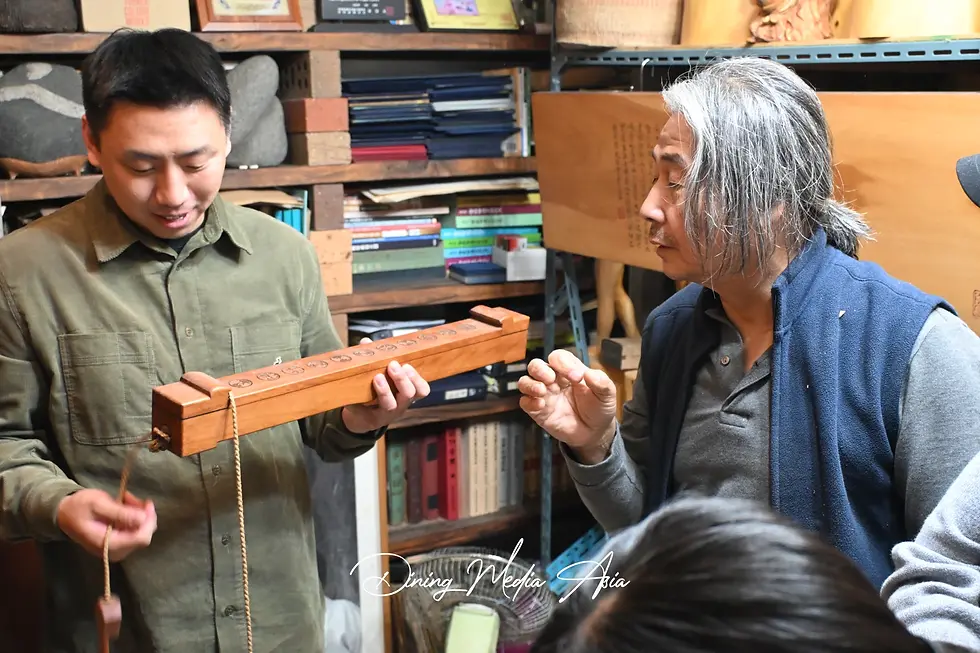
This philosophy extends beyond cooking. Jueun commissions handcrafted tools—such as traditional dasik molds made by master woodcraft artisan Kim Gyu-seok—to embed meaning into form. Chef Park believes tools carry the intentions of their makers, and that this intention naturally transfers to food.
Jueun Seoul Jueun Park Korean Fine Dining
The team also studies regional foods rarely encountered in modern urban life. Dishes such as gochujabakji, unfamiliar even to Seoul-born staff, reveal how much of Korean cuisine has quietly disappeared. Rediscovering these flavors is both personal research and collective education.
Translating Korean Cuisine into Fine-Dining Language
Traditional Korean regional dishes often feature bold, direct seasoning. Rather than softening these flavors immediately, Chef Park emphasizes understanding their origins—climate, preservation methods, and communal eating habits.
At Jueun, this approach is evident in dishes such as byeongeo-jjim (steamed butterfish), which retains its spicy seasoning while introducing layered vegetables and a seafood-based porridge instead of rice. The goal is not dilution, but flow.
A similar sensibility shapes dishes like octopus naengchae, where seasonal citrus and zest enhance aroma without disrupting the dish’s identity.

Jang: The Structural Backbone of Korean Cuisine
For Chef Park, jang is the framework that holds Korean cuisine together. Change the sauce, and the entire dish changes character. Historically, jang was so important that royal courts maintained dedicated facilities for its management.
At Jueun, jang is made annually, with batches aged across multiple years. Yet Chef Park questions the assumption that house-made jang is inherently superior.
“Just as great restaurants don’t need to produce their own olive oil to use exceptional olive oil, what matters first is knowing what good jang is,” he says.
Making jang at Jueun is therefore both practice and education—an accumulation of sensory knowledge that deepens understanding over time.

Seasonality Beyond the Four Seasons
Jueun’s menu does not follow the abstract idea of four seasons, but the finer rhythm of Korea’s solar terms. Ingredients dictate change. When an ingredient disappears, the menu evolves—that is the season.
Chef Park visits markets weekly with his team, believing that cooking depth depends on proximity to nature. Regional markets, in particular, reveal ingredients rarely found in large commercial supply chains.
These field visits gradually expand Jueun’s sourcing network and form the foundation of its R&D process.
How Korean Cuisine Continues
Chef Park views Korean culinary history—from royal court cuisine to everyday home cooking—not as a hierarchy, but as a continuous flow. Expressions change, but the root remains singular.
For him, authenticity lies not in invention, but in deciding what should be carried forward.
“Eating is a five-sensory cultural experience,” he says. Food, ceramics, utensils, spatial design, and visual elements must move together. At Jueun, a wide spectrum of Korean craft—onggi, buncheong, celadon, porcelain, brassware, wood—is actively integrated into the dining experience.
The restaurant’s use of ink-wash imagery from the National Museum of Korea and spatial design inspired by traditional landscape painting further reinforces this unified rhythm.

The Future of Korean Cuisine at Jueun
When asked where his focus lies today, Chef Jueun Park answers without hesitation: preserved foods.
“They take time, and opportunities are limited. Miss the moment, and the same conditions will never return.”
Rather than creating novelty, he is focused on strengthening foundations—deciding which elements of Korean cuisine’s long history deserve continuity.
At Jueun, the cuisine is not a reinterpretation for effect, but a contemporary record within an unbroken lineage—one already preparing to be passed on to the next generation.
Korean fine dining, Korean cuisine philosophy, Chef Jueun Park, Jueun restaurant Seoul, bansang Korean table, Korean fermentation jang, contemporary Korean gastronomy, Korean culinary heritage, Seoul fine dining restaurant
댓글